
Post
Arch Support House Shoes: 7 Amazing Reasons They Save Your Feet
Jun
In the evolving landscape of contemporary domestic living and remote professional work, modern adults spend an unprecedented number of hours moving inside their own homes. We invest substantial financial capital into high-end kitchen appliances, robotic vacuum cleaners, and premium hardwood flooring to create an exceptionally aesthetic living space. Yet, millions of environmentally and health-conscious individuals commit a catastrophic biomechanical error every single day: walking entirely barefoot across unyielding indoor surfaces like polished concrete, ceramic tiles, and engineered wood.
Over extended periods, this relentless indoor pounding completely crushes your foot’s natural biological fat pads. To protect your skeletal infrastructure and eliminate domestic fatigue entirely, upgrading to premium Arch Support House Shoes is an absolute necessity.
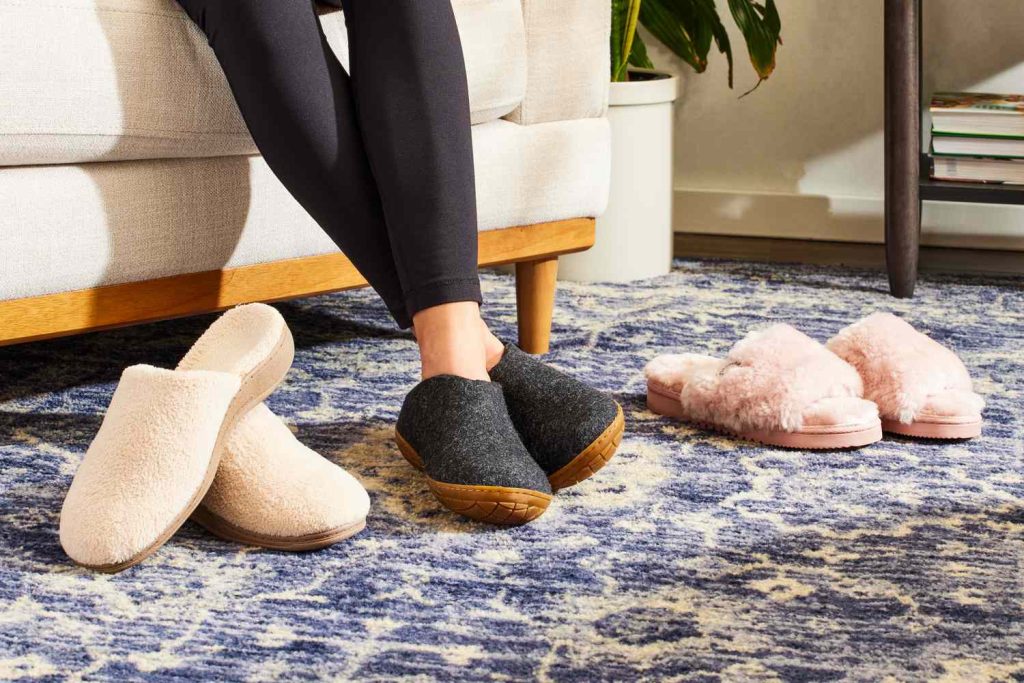
Far removed from the cheap, floppy, and unsupportive disposable slippers of the past, modern engineered domestic footwear represents a magnificent triumph of podiatric science. By incorporating semi-rigid orthotic footbeds, high-rebound cushioning foam matrices, and slip-resistant indoor outsoles, these specialized shoes actively realign your kinetic chain while providing a deeply satisfying, cushioned barrier against hard floors. In this comprehensive domestic foot wellness masterclass, we dissect the biomechanical engineering behind these footwear marvels and explore 7 amazing reasons why wearing Arch Support House Shoes will completely transform your everyday home routine.
1. Biomechanical Alignment inside Arch Support House Shoes
The primary musculoskeletal hazard of walking barefoot inside your home is the uncontrolled vertical collapse of your longitudinal arch. When you stand on a completely flat, rigid ceramic tile floor, gravity forces your midfoot navicular bone downward. This stretches your delicate plantar fascia tendon beyond its biological elasticity limit, triggering microscopic tearing and chronic morning heel pain.
Premium Arch Support House Shoes permanently prevent this kinetic collapse through highly engineered footbed architecture. The footbed features a built-in, semi-rigid orthotic arch bridge that matches the exact biological curvature of a healthy human foot. When you slip your foot inside, this anatomical shelf instantly lifts your midfoot, redistributing your standing body weight evenly across your entire plantar surface. To understand the complex anatomical skeletal linkages and load-bearing mechanics of the lower limbs, you can review the official Wikipedia database on the human foot.

2. Deep Calcaneal Cupping for Heel Spur Relief
A widespread structural deficiency in generic, cheap house slippers is a completely flat, non-existent heel cradle. When you pace in unstable slippers, your heel shifts and wobbles laterally sideways with every single step, forcing your tiny micro-stabilizer muscles to overwork and heavily irritating the inflamed heel pad bursae.
Authentic Arch Support House Shoes incorporate an exceptionally deep, recessed calcaneal heel cradle. This geometric perimeter walls physically surround your natural heel fat pad, cupping the calcaneus securely and locking your heel into a dead-center vertical alignment. By entirely preventing lateral wobble, the deep cup physically gathers your foot’s own natural organic fat underneath the heel bone, concentrating organic cushioning directly beneath tensed heel spurs.
3. High-Density Memory Foam Midsole Matrices
A common consumer misconception is that an indoor shoe should feel as soft, flat, and mushy as a down feather pillow. Podiatrists warn that bottoming out against unstable, mushy foam causes severe lateral ankle fatigue, forcing your leg muscles to tense continuously just to keep your ankles from rolling sideways.
Elite orthotic indoor shoes utilize dual-density composite footbeds. The bottom base consists of firm, high-density closed-cell Ethylene-Vinyl Acetate (EVA) that establishes an unshakeable structural perimeter. Resting directly above this base is a deeply calculated 8mm layer of high-rebound memory foam. This brilliant composite layer cushions your initial step with luxurious softness, but immediately firmed up to provide stable, bottomless kinetic support.
4. Wide Toe Box Ergonomics and Bunion Prevention
When dealing with tensed plantar ligaments, pinching your front toes into a narrow, tapered house slipper restricts crucial localized blood circulation and heavily accelerates painful nighttime foot cramps. Standard house slippers compress your metatarsals unnaturally.
Structured indoor shoes are built around wide, foot-shaped anatomical toe boxes paired with slight metatarsal elevation pads. This ergonomic geometry physically lifts the central metatarsal heads slightly, taking mechanical pressure entirely off the ball of the foot while allowing your five toes to splay and fan outward naturally. This unconstrained posture dramatically improves standing balance and promotes localized arterial blood flow to accelerate tissue healing.
5. Anti-Skid TPR Outsoles for Domestic Floor Safety
Medical-grade interior orthotics mean absolutely nothing if the footwear poses a dangerous slipping hazard on smooth hardwood foyers, polished wet bathroom tiles, or rain-slicked outdoor patio decking. Slips and falls represent a leading cause of domestic orthopedic trauma.
While the interior footbed cures foot pain, the bottom exterior outsole of premium Arch Support House Shoes is fortified with heavy-duty Thermoplastic Rubber (TPR). These advanced non-marking outsoles feature custom wave-patterned siping and miniature suction pods. This high-friction micro-texture actively grips smooth domestic floors, displacing spilled liquid water pools to establish an unshakeable, slip-free mechanical grip.
6. Protecting Remote Workers and Active Homemakers
The average active remote professional or dedicated homemaker easily logs between 5,000 to 8,000 physical steps daily purely inside the perimeter walls of their household—pacing during long conference calls, preparing dinner on hard kitchen floors, and carrying heavy laundry baskets down wooden stairs.
Without an engineered shock-absorbing midsole, every single indoor step sends a harsh kinetic shockwave traveling straight up your shin bone. Over a 365-day cycle, this unabsorbed domestic kinetic shock causes severe lower lumbar stiffness and knee joint inflammation. Wearing structured indoor shoes places an active kinetic dampener beneath your foot, turning punishing indoor walking into a smooth, effortless glide.
7. Connecting to a Complete Foot Wellness Loop
Securing a dedicated pair of orthotic house shoes guarantees your feet remain completely protected and supported during your crucial evening resting and morning waking routines. However, your healing journey remains entirely incomplete if you step outside into flat, unsupportive market flip-flops.
To construct an impenetrable, clinically proven 24-hour foot recovery command center, pairing your indoor footwear with dedicated therapeutic outdoor slippers is mandatory. Complete your absolute domestic foot recovery setup today by reviewing our definitive masterclass on curating Plantar Fasciitis House Slippers.
Frequently Asked Questions
Can I wear Arch Support House Shoes outside to check the mail?
Yes, absolutely! Provided you select a model equipped with a reinforced Thermoplastic Rubber (TPR) or hard EVA composite outsole, your indoor orthotic shoes are entirely capable of handling outdoor concrete sidewalks, asphalt driveways, and gravel garden paths. The durable bottom rubber layer entirely protects the inner orthotic footbed from abrasive external wear.
How do orthotic house shoes alleviate lower back pain?
Lower back pain is frequently triggered by abnormal kinetic alignment originating at your feet. When you walk barefoot on hard domestic floors, your feet over-pronate, which physically rotates your lower leg bones inward and tilts your pelvic bowl forward abnormally, pinching your lower lumbar discs. The built-in orthotic arch support of house shoes instantly corrects this pronation, realigning your knees, squaring your pelvis, and entirely removing abnormal mechanical compression from your lower back.
Conclusion
In summary, making the intentional lifestyle upgrade to premium Arch Support House Shoes represents a phenomenal, highly pragmatic investment in your daily remote working efficiency, skeletal alignment, and residential physical comfort. By successfully combining podiatric arch bridges, high-density kinetic shock foam, and slip-resistant hybrid outsoles, these appliances entirely eliminate the exhausting domestic pounding of hard indoor floors. Give your hard-working feet the luxurious, supportive home base they deserve today by exploring the elite indoor collections available at the Pod Story comfort boutique.
